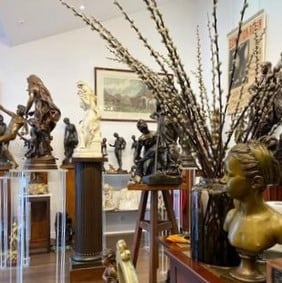
85, rue des Rosiers, Marché Biron - Stands 113, 114 & 115 Allée 1, 93400 SAINT-OUEN, France
carolinemiguet@icloud.com
+33 6 71 93 49 35

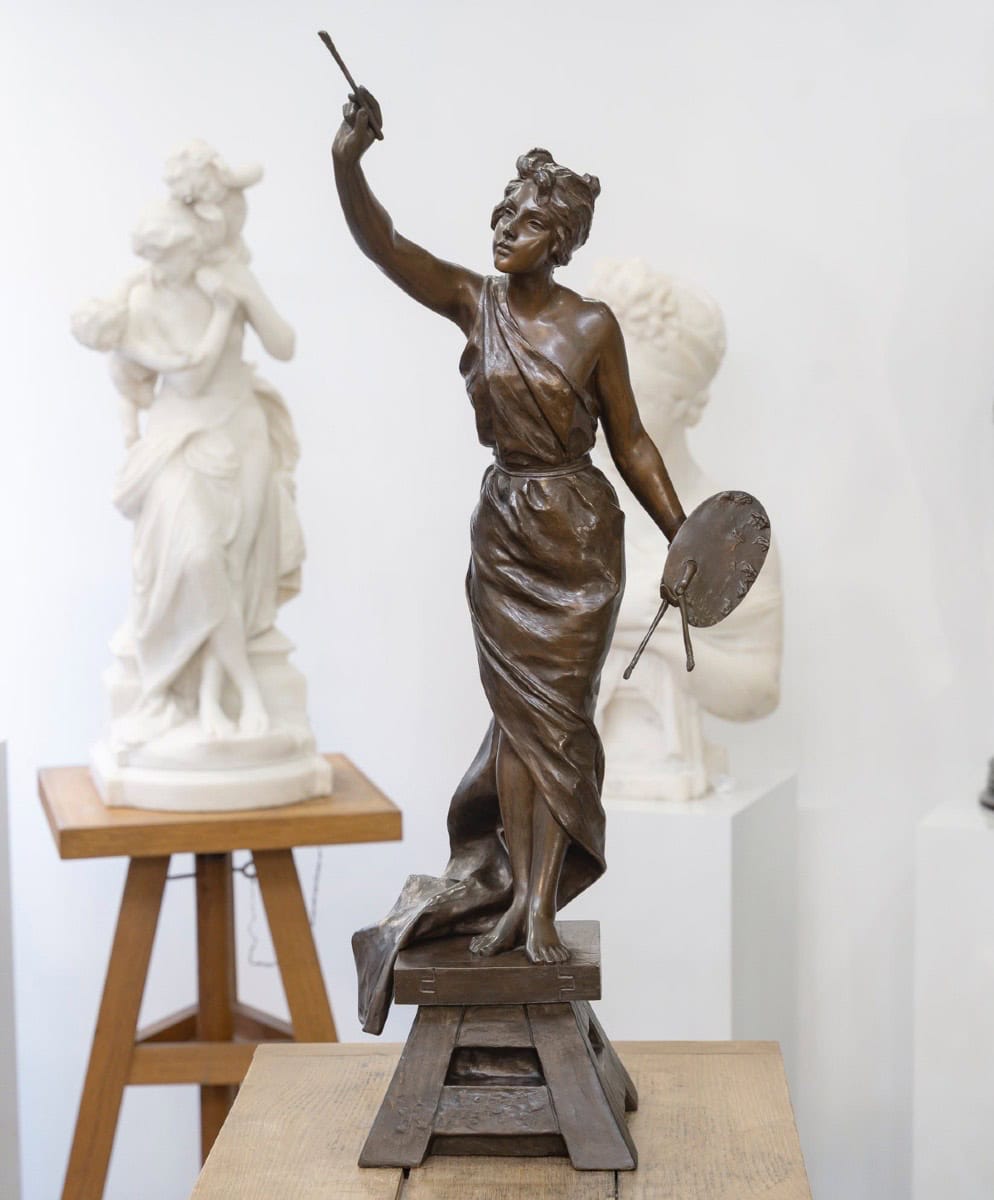
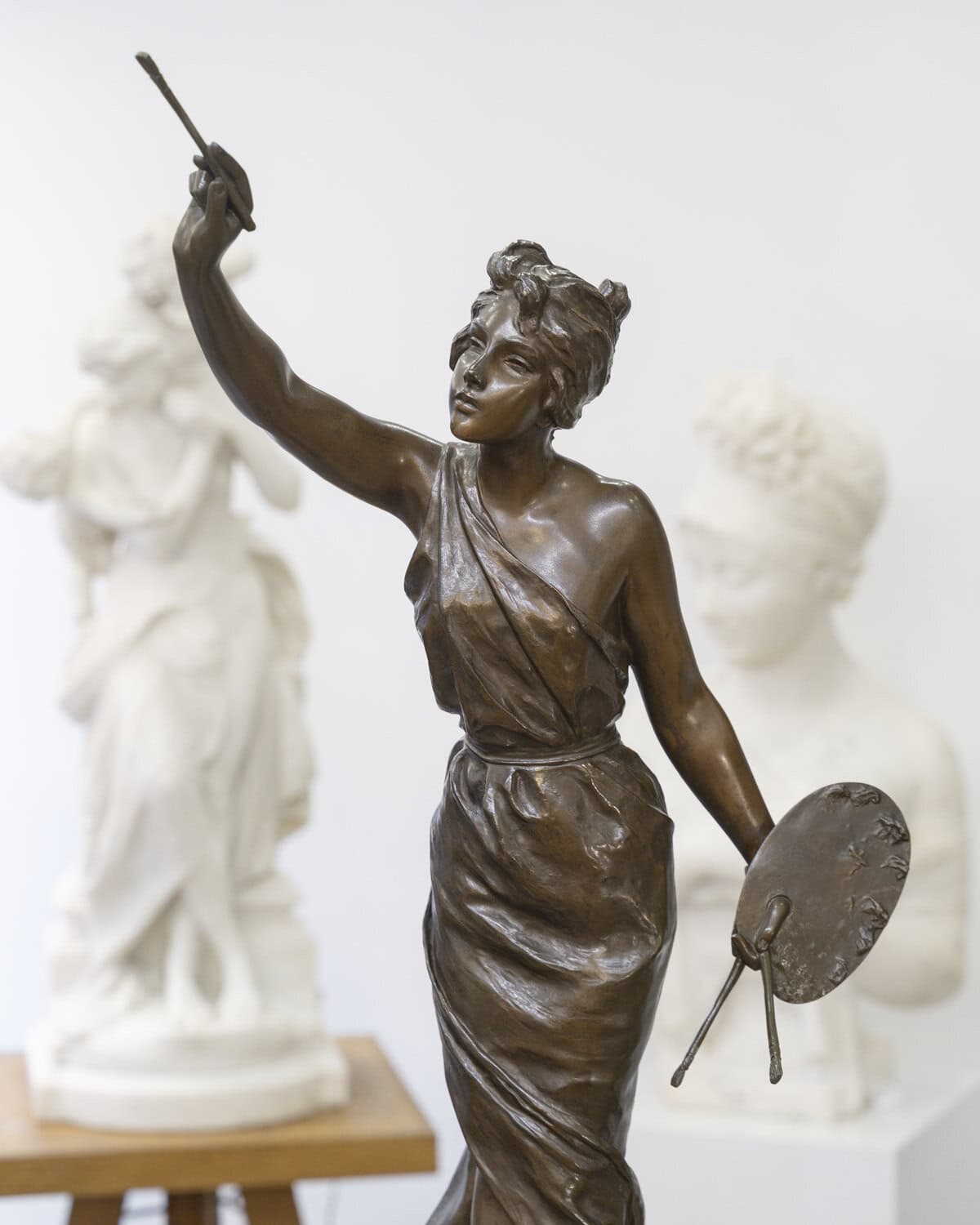
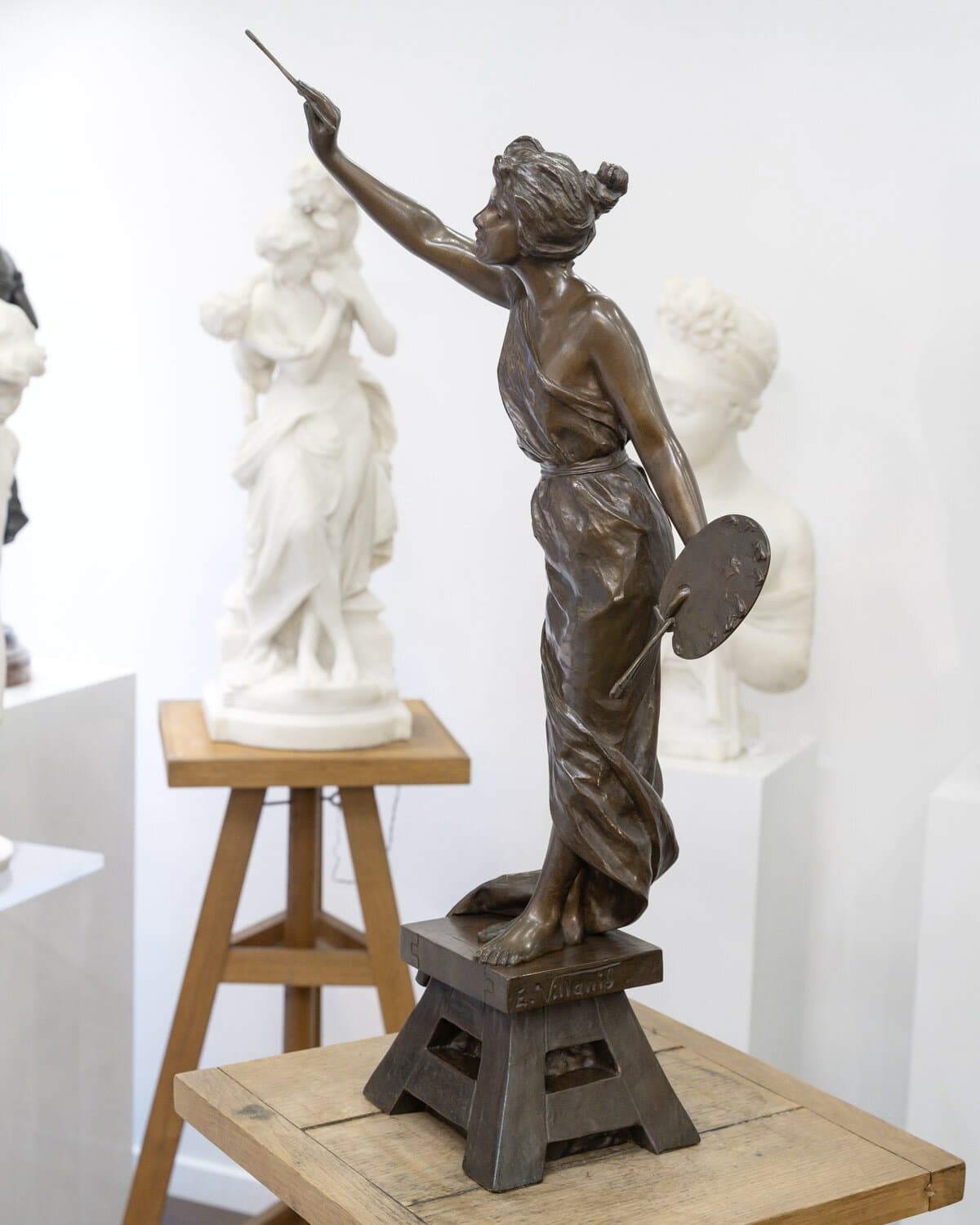
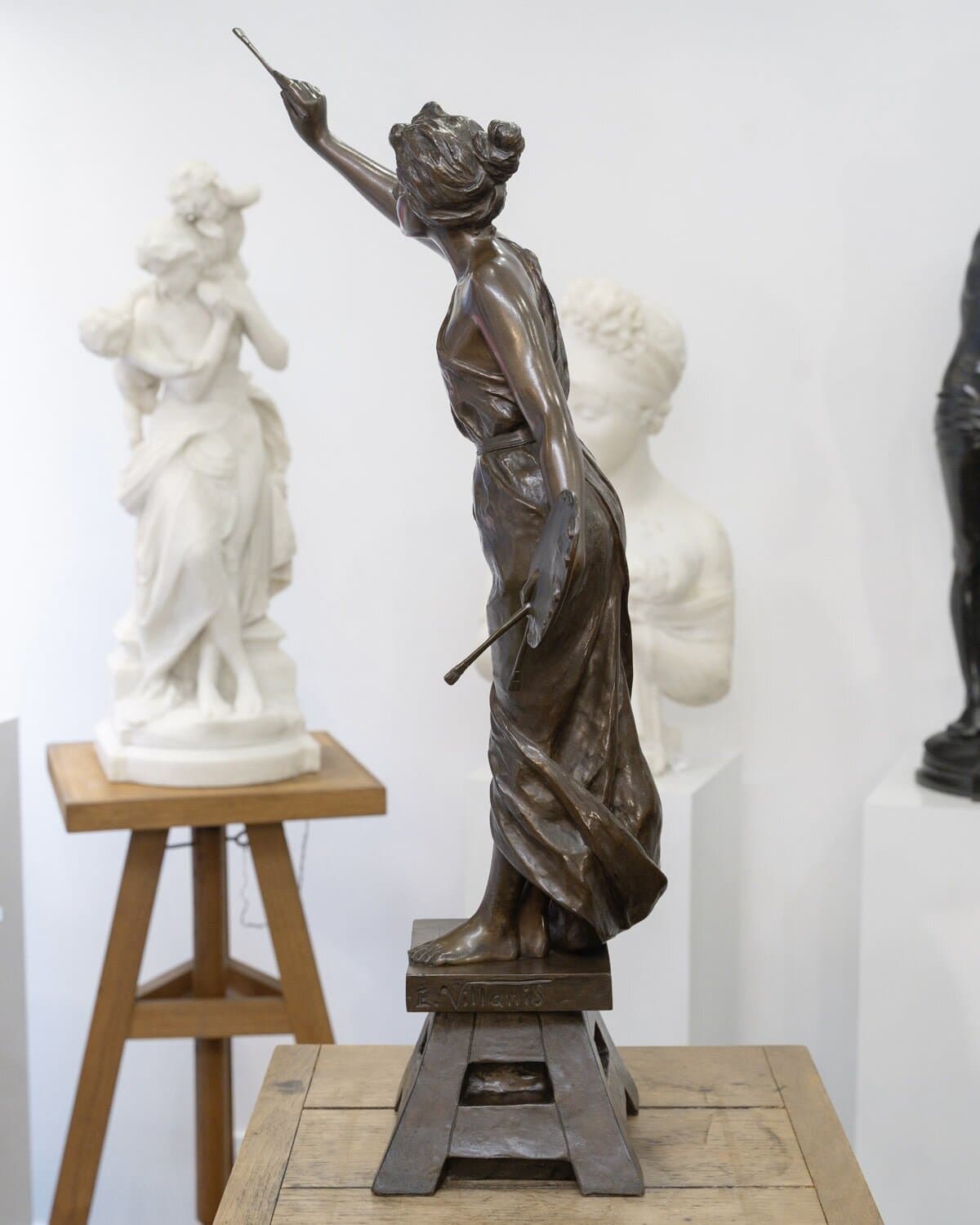
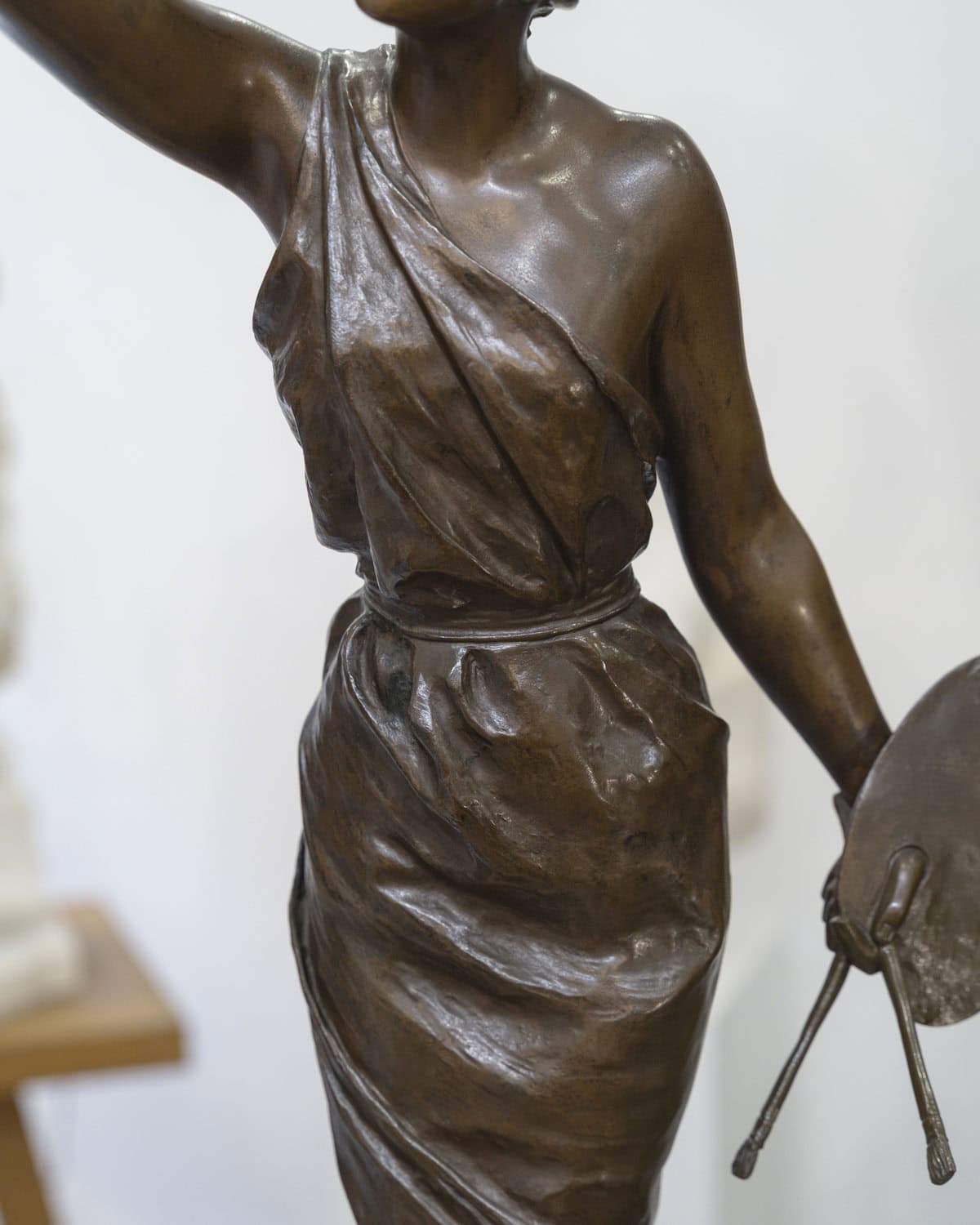
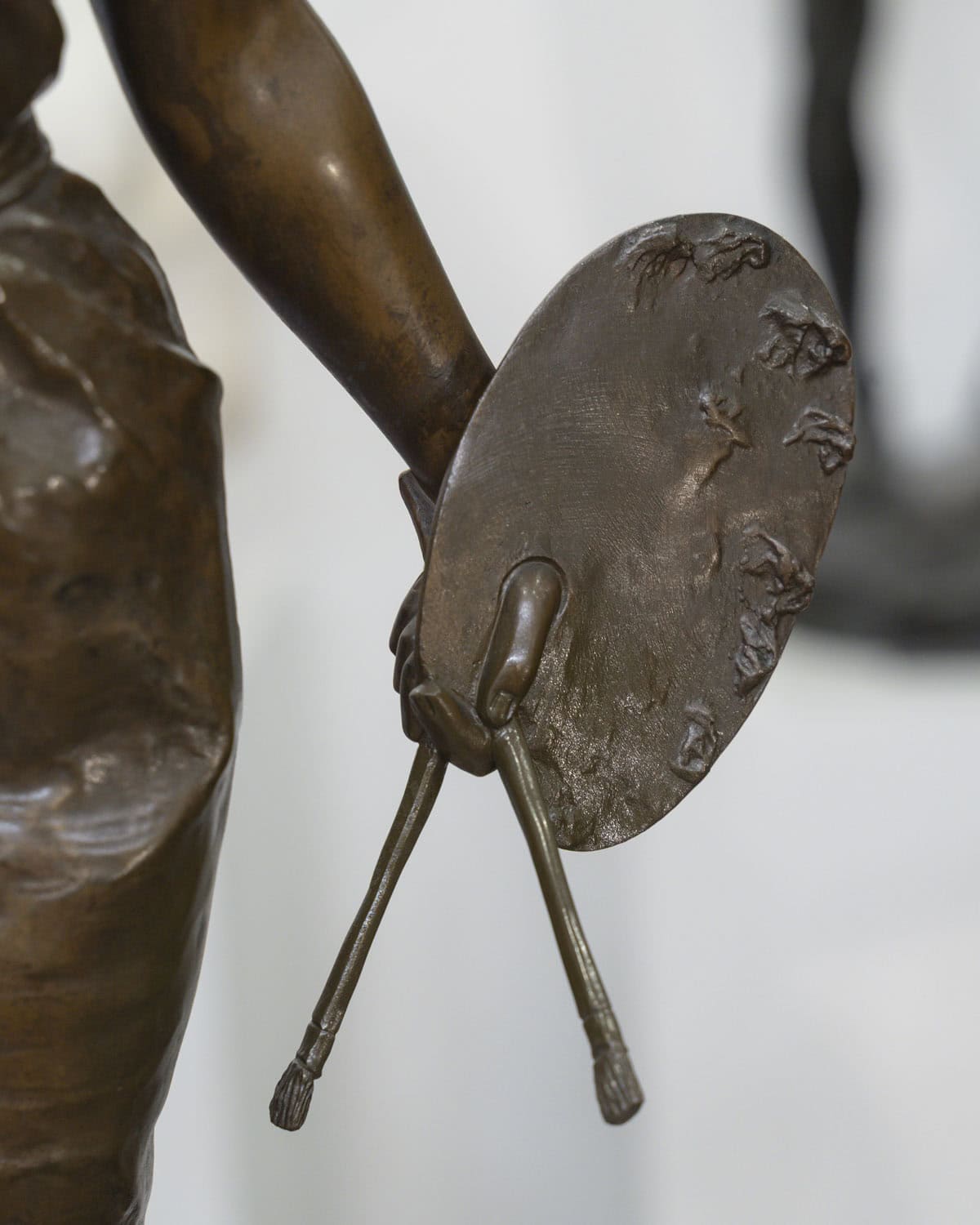
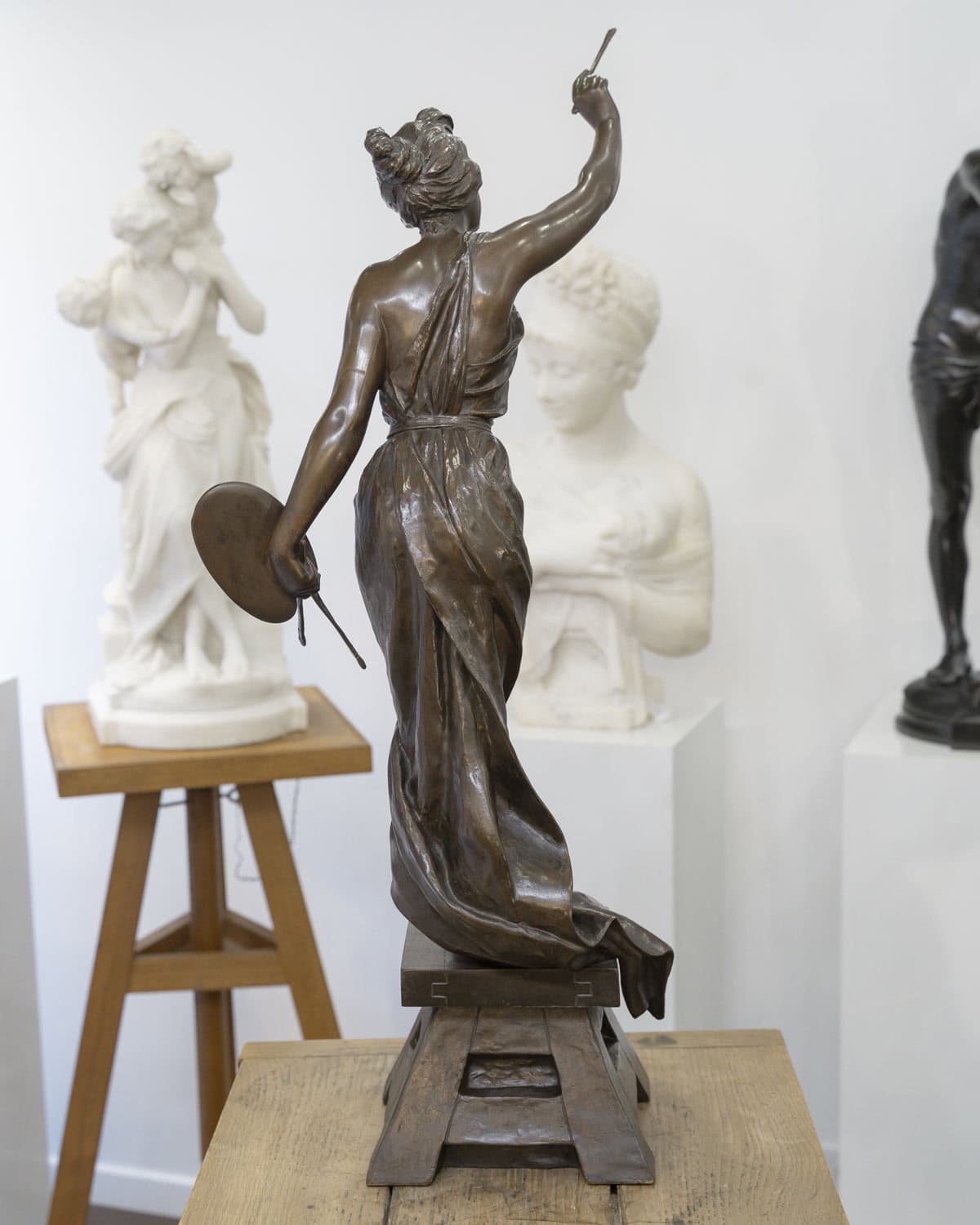
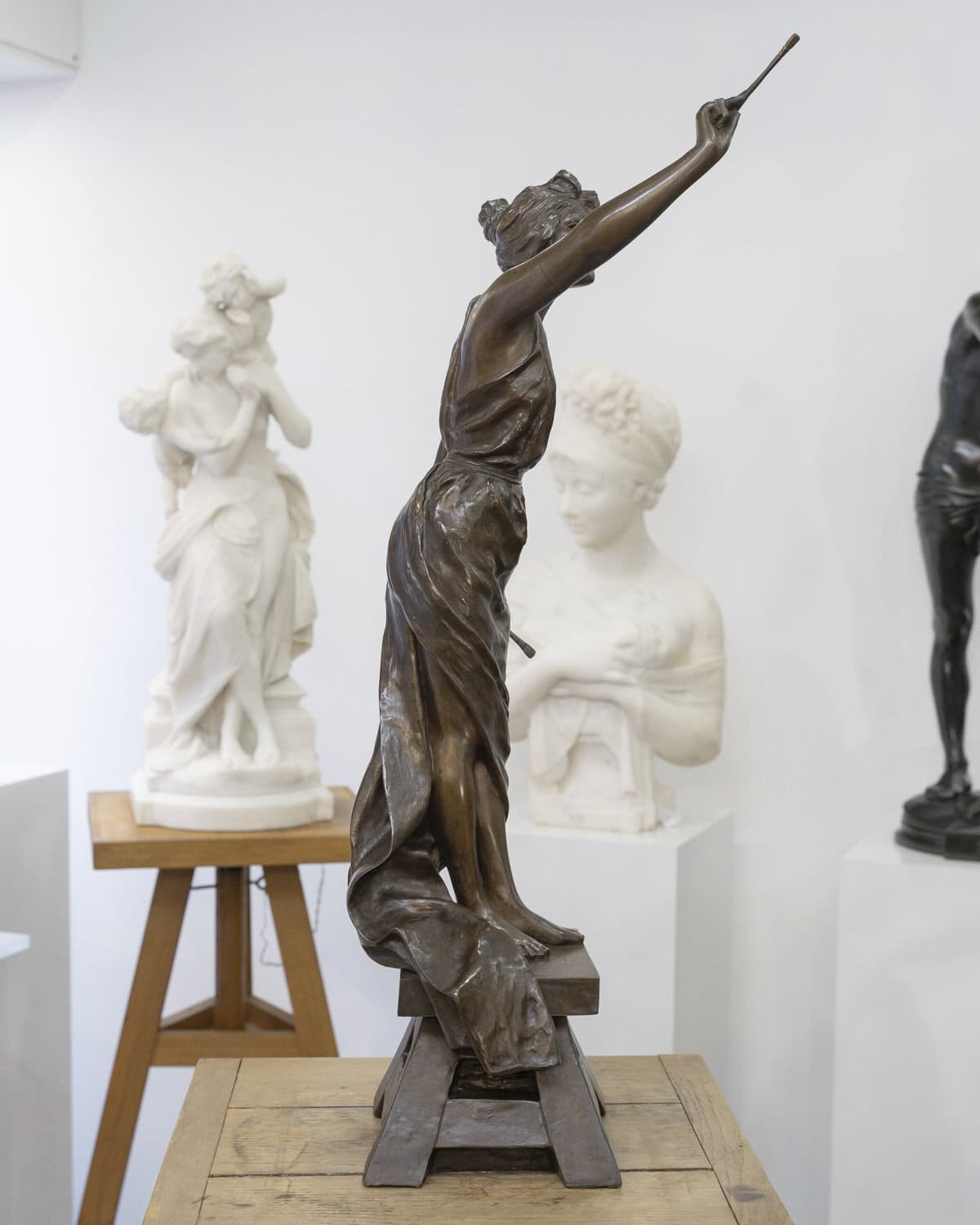
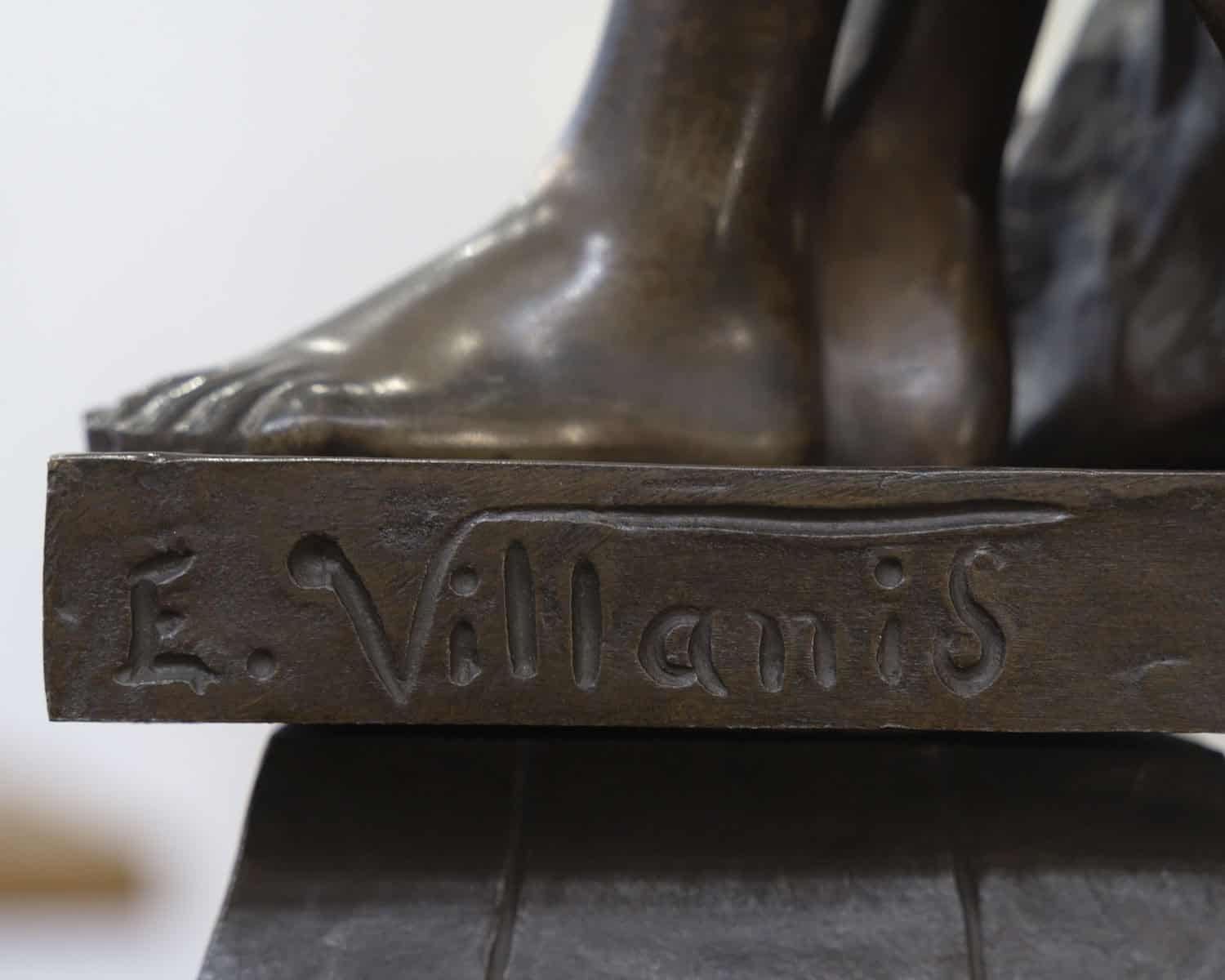
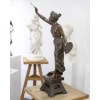
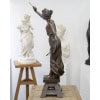
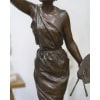
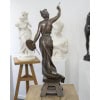
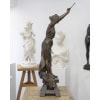
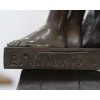
Emmanuel Villanis (1858 – 1914)
Emmanuel Villanis , est un célèbre sculpteur , issu d’une famille d’origine italienne .
Il est reconnu comme l’un des principaux représentants de la période Art Nouveau .
En 1871 , le jeune homme s’inscrit à l’Académie des Beaux-Arts Albertina , à Turin .
Il y suit l’enseignement du sculpteur « Odoardo Tabacchi » .
Dès la fin de ses études , son maître le pousse à exposer : son buste « Alda » est ainsi présenté à Milan en 1881 .
Il fuit l’Italie à cause de la guerre d’indépendance .
En 1885 , E.Villanis s’installe à Montmartre , un quartier de Paris qu’il ne quitte plus .
La renommée de l’artiste se construit sur sa production de figures féminines : »Aida » , « Judith » , »Sapho » , « Dalila » , « Lucrèce » , « Cendrillon » .
L’ œuvre d’Emmanuel Villanis rassemble les grandes héroïnes de l’opéra , de la littérature , de la mythologie et de la Bible .
E.Villanis aborde également certains types : la Bohémienne , la Châtelaine , ou encore la Parisienne …
Plusieurs allégories , dont « La Peinture » et « La Sculpture » .
Son jeu sur les patines ajoute encore à la finesse du trait , faisant d’Emmanuel Villanis un des sculpteurs majeurs de l’Art nouveau.
E . Villanis partice à l’ Exposition Universelle de 1889 à Paris , et à celle de Chicago en 1893.
Emmanuel Villanis (1858-1914)
Emmanuel Villanis was a famous sculptor from a family of Italian origin .
He is recognized as one of the leading figures of the Art Nouveau period .
In 1871 , the young man enrolled at the Albertina Academy of Fine Arts in Turin .
He studied under the sculptor Odoardo Tabacchi .
Upon completing his studies, his teacher encouraged him to exhibit : his bust « Alda » was thus presented in Milan in 1881 .
He fled Italy because of the War of Independence .
In 1885 , Emmanuel Villanis settled in Montmartre , a district of Paris he never left .
The artist’s renown was built on his production of female figures : « Aida » , « Judith » , « Sappho » , « Delilah » , « Lucretia » , « Cinderella » .
Villanis’s work brings together the great heroines of opera , literature , mythology , and the Bible .
He also explored certain types : the Bohemian woman , the Chatelaine , and the Parisian woman .
Several allegories , including « Painting » and « Sculpture » .
His use of patinas further enhances the finesse of his lines , makingEmmanuel Villanis one of the major sculptors of Art Nouveau .
E. Villanis participated in the Universal Exhibition of 1889 in Paris , and in the Chicago Exhibition of 1893.
| Lieux | |
|---|---|
| Siècle | |
| Style | |
| Type d'Objet |